

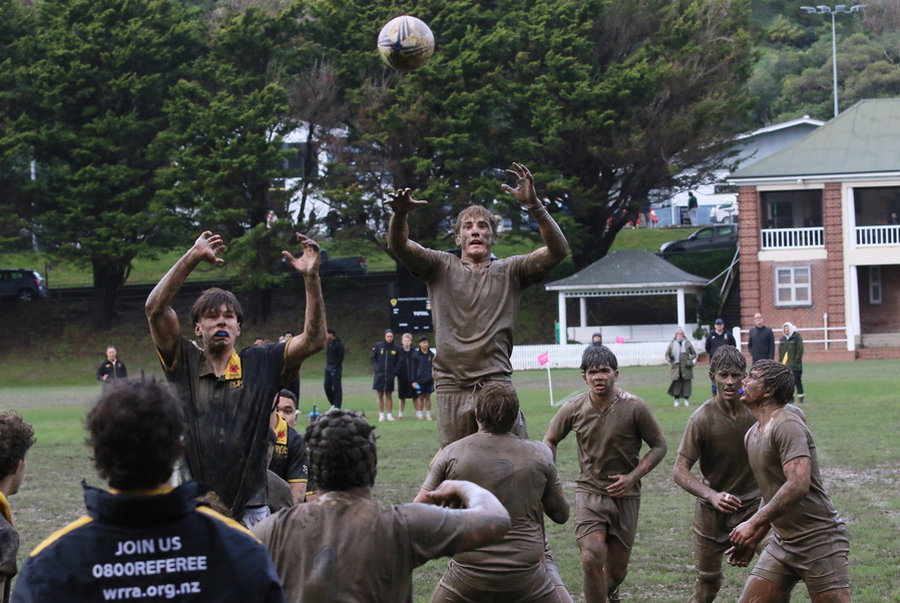
Every New Zealand rugby career, no matter how far it eventually travels, starts with someone standing on the sideline of a local ground. There is no broadcast deal and no sponsorship logo, yet it has outlasted every era of the professional game built on top of it. This is club rugby, just why does it remain at the heart of New Zealand’s game?
A Community Built Through Generations
Long before rugby became a business, it was a neighbourhood institution, and that identity took root at club level almost immediately.
Nelson Rugby Football Club, founded in 1868 and credited with introducing rugby rules to New Zealand in 1870, is recognised as the country’s oldest surviving club.
Clubrooms once functioned as the genuine centre of community life, and in the 1950s, crowds of 10,000 were not unusual for Wellington’s Poneke versus Petone or Dunedin’s Southern versus University, rivalries still spoken about.
The Volunteers Behind Every Team
None of that history survives without people who show up unpaid, week after week, to make it happen. Coaches, committee members, canteen staff and groundskeepers form the backbone of New Zealand club rugby, with over 20,000 volunteers and administrators sitting behind the game nationwide.
That commitment is increasingly matched with investment, with NZR’s Legacy Fund distributing $1.2 million into grassroots clubs in 2026 alone, funding new clubrooms and female changing facilities nationwide.
Room for Every Player
Club rugby’s other defining feature is how far it stretches to include players the elite game leaves out.
The pathway runs from junior grades through to senior premier rugby at every club in the country, but the clearest example is the Under 85kg National Club Cup, a national knockout competition for smaller players who would rarely make an open-weight side.
Attracting over forty teams a season, it has grown into a representative pathway, complete with its own New Zealand team and international tours.
A Game That Still Needs Its Roots
Professionalism has changed where New Zealand rugby’s attention and money now sit, and New Zealand Rugby acknowledges that clubs no longer hold the influence over player pathways they once did. Yet the organisation still names community as one of its core strategic priorities, because the professional game was never designed to stand on its own.
For all your latest rugby news, and everything else about the oval ball, follow Rugby365.


