

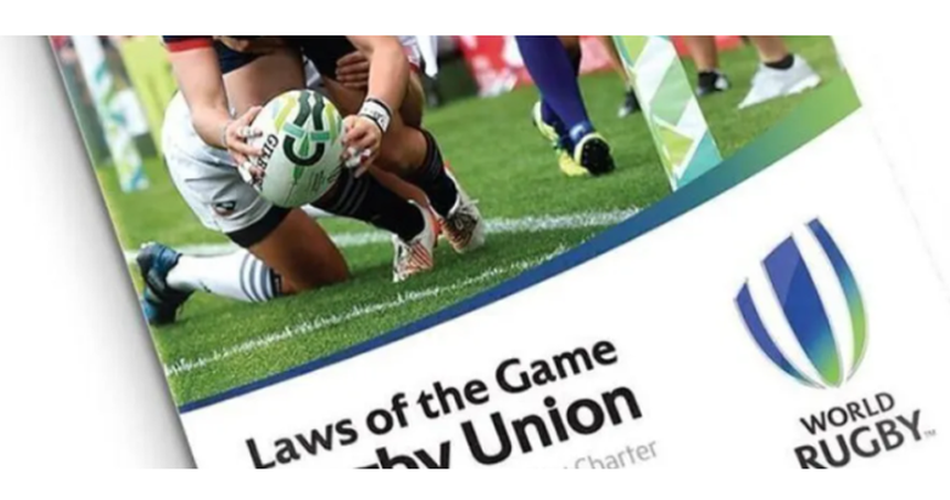


- By Touchline
Updated: The tragic accidental death of a weight-restricted grade rugby player in Auckland last weekend ought to prompt an emphatic response from Rugby Union’s governing bodies. As a result of a tackle performed in accordance with the current laws of the game, a player has lost his life, leaving a widow and three young children aged 5, 4 and 1.
As was described by a witness to the tragic accident, reported in the media, “a guy came through and tackled him. There was no malice in it, it was a good hard tackle, it was a good hard game.”
The current assumption (by those responsible for the Laws of the Game) is that the tackle law (“Law 14”) as it is written today, is sufficient at the community level to ensure player safety, and therefore that any accidental death arising from this element of the game is “inreprehensus”, (i.e., without blame).
Touchline suggests, assuming that players are otherwise physically fit and participating within the spirit and laws of the game, (as it is assumed was the case last weekend), most families would not readily accept the risk of “accidental death” as a consequence of playing the game at a community level on a Saturday afternoon at a local sportsground.
There are safer sports.
If Touchline’s suggestion above is true, then (based on media reports of the accident) it is reasonable to further suggest that Law 14 is currently deficient and additional steps should be immediately taken by Rugby Union’s lawmakers to ensure player safety, with an immediate amendment to Law 14, (as applicable to the community game) required.
Now, Touchline does not claim to be a rugby expert, nor to have special legal insight or training, but nonetheless suggests the following important and necessary changes to Law 14 be made without delay, (as underlined below).
Requirements for a tackle
For a tackle to occur, the ball-carrier is held and safely brought to ground by one or more opponents.
Being brought to ground means that the ball-carrier is lying, sitting or has at least one knee on the ground or on another player who is on the ground.
Being held means that a tackler must continue holding the ball-carrier until the ball-carrier is on the ground.
Safely means that the tackler has, in executing the tackle in accordance with this Law 14, made all reasonable efforts to ensure that the tackled player is not injured in the process of being brought to ground.
Sanction: Penalty
The adjudicator of the tackler’s actions would be the Match Referee.
The consequence of this law change is to support World Rugby’s Playing Charter which states that “to achieve the correct balance,” (between enjoyment at the community level and entertainment at the professional level), “the laws are constantly under review.” Now is the time for a review to be undertaken.
Whether or not readers agree with Touchline’s suggestion as above, not taking any action in response to last weekend’s tragedy, (or at least not having an active debate on the suitability of the current law and the consequences of injury or death arising), might suggest negligence by all who are concerned about the nature of the game and who want to ensure that there continues to be ongoing, widespread, community support and participation.
Postscript: In today’s press, a Super Rugby player is quoted as saying, “I know it’s footy, you pretty much hurt each other on the field, but I always check up on people.” Where there is acceptance at the professional level that injuring other players is part and parcel of the game, greater steps are urgently needed to ensure the same sentiments are not carried into the community arena.
Read about the tragic death of Counties Manukau U85kg grade club player Cory Heather HERE (link to a RNZ news article)
Discover more from ClubRugby.nz
Subscribe to get the latest posts sent to your email.


